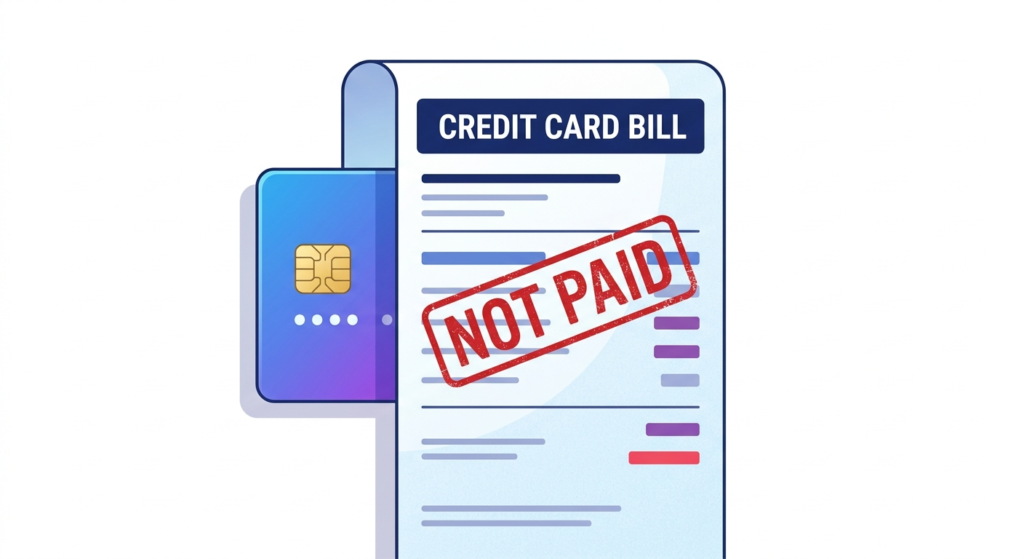
What happens if you ignore your credit card bill for months? The problem does not stay small. It slowly grows and becomes harder to control. Credit card debt is money you borrow from the bank when you spend using a credit card. If you do not pay it back on time, the debt does not stop on its own.
Credit cards are used every day because they are easy and fast. But when payments are missed, small balances can turn into a serious financial burden over time. Many people do not realize how quickly this can happen until it becomes difficult to manage.
In this article, you will understand how credit card debt grows, what problems can happen if it is ignored, and how it can affect your daily money life.
How Credit Card Debt Works ?
What is Credit Card Debt?
Credit card debt is the money you borrow from a bank when you use a credit card. Every time you make a purchase, you are using borrowed money. If you do not pay it back fully, it becomes debt and stays with you.
Key Points:
- Money borrowed using a credit card
- Must be paid back after spending
- Becomes debt if not fully cleared
Example:
You buy items worth $100 on your credit card. If you do not pay the full $100 back, that amount becomes your credit card debt.
What is Interest?
Interest is an extra charge added to your unpaid credit card balance. It is charged every month on the remaining amount. This makes your total debt increase even if you do not make new purchase.
Key Points:
- Extra cost on unpaid balance
- Charged every month
- Increases total debt over time
Example:
If you owe $100 and do not pay it, interest is added next month, and your debt becomes more than $100.
Minimum Payment Explained
The minimum payment is the smallest amount you must pay each month to keep your credit card active. It helps you avoid penalties, but it does not remove your debt quickly.
Key Points:
- Small required monthly payment
- Keeps account active
- Does not clear debt fast
Example:
If your bill is $100, the bank may ask you to pay only $10 as a minimum. But the remaining $90 still stays as debt and grows with interest
What Happens When You Do Not Pay Credit Card Debt ?
Debt Keeps Increasing
When you do not pay your credit card bill, interest keeps adding again and again. This means your unpaid balance does not stay the same. It grows every month. Even if you stop using the card, the debt still increases because of interest charges. Over time, a small unpaid amount can turn into a large financial burden that becomes harder to clear.
Key Points:
- Interest is added repeatedly
- Total debt keeps rising
- Balance becomes harder to clear
- Debt grows even without new spending
Example:
A small unpaid amount can slowly grow and become double over time if left unpaid.
Late Fees and Extra Charges
When you miss a credit card payment, the bank adds late fees to your account. These fees are charged every time you miss the due date. Along with late fees, extra penalties or higher interest rates may also apply. This makes your total bill increase quickly. As a result, even if your original spending was small, your final amount becomes much higher due to repeated charges.
Key Points:
- Late payment fees are charged
- Extra penalties may apply
- Monthly bill increases
- Higher total repayment amount
Example:
If you miss your payment date, your next bill becomes higher because of added fees.
Credit Score Goes Down
Your credit score is a record of how you manage borrowed money. It shows banks whether you pay your bills on time or not. When you miss credit card payments, your credit score drops. A lower score creates problems in the future because banks see you as a risky borrower. This can affect your ability to get loans, credit cards, or even rent a house in some cases.
Key Points:
- Shows payment history
- Goes down with missed payments
- Affects future loans and credit access
- Signals financial risk to banks
Example:
A person with a low credit score may not get approval for a car loan or may get it at a higher cost.
Account Sent to Collections
If you do not pay your credit card debt for a long time, the bank may stop trying to collect the money directly. Instead, they send your debt to a collection agency. These agencies specialize in recovering unpaid money. They may contact you repeatedly through calls, messages, or letters. This stage usually increases pressure and stress because the recovery process becomes more aggressive.
Key Points:
- Debt transferred to collection agency
- Frequent contact for payment recovery
- Increased pressure to repay
- More serious debt stage
Example:
You may start receiving frequent calls and letters asking you to clear your pending balance.
Legal Action Risk
In severe cases where the debt remains unpaid for a long time, the lender may take legal action. This means the case can go to court. The court may order you to repay the amount. In some situations, legal recovery steps may be taken based on local laws. This stage usually happens only when all other collection efforts fail, but it is still a possible outcome of long-term unpaid debt.
Key Points:
- Court involvement in severe cases
- Legal notices may be issued
- Formal repayment orders possible
- Happens after long non-payment
Example:
A long-unpaid debt may lead to a court notice asking for repayment.
Mental and Emotional Stress
Unpaid credit card debt does not only affect your finances. It also affects your mental well-being. Constant reminders, increasing debt, and collection calls can create ongoing stress. Many people feel worried about their financial situation and struggle to focus on daily life. This stress can affect sleep, confidence, and overall peace of mind.
Key Points:
- Constant money pressure
- Increased stress and anxiety
- Affects daily life focus
- Emotional burden builds over time
Example:
A person with growing debt may feel worried every time they think about bills or expenses.
Warning Signs You Should Not Ignore
- You only pay the minimum amount every month
- Your credit card balance never decreases
- Your bills are always paid late or after the due date
- You feel more stress and worry about money
Tips to Avoid Credit Card Debt Problems
- Pay more than the minimum amount whenever possible
- Track your spending regularly to know where your money goes
- Set a simple monthly budget and follow it
- Avoid unnecessary or impulsive purchases
Conclusion
Credit card debt grows when it is ignored. It does not stay the same. It keeps increasing and can create both money problems and stress in daily life. Small actions taken early can stop big problems later. Paying attention to your debt on time makes it easier to stay in control of your money. Start tracking your spending today. Always try to pay at least the minimum amount on time to avoid extra charges and growing debt.
FAQS
Can credit card debt go away if ignored?
No. Credit card debt does not go away if you ignore it. It keeps increasing because interest is added every month. Over time, the total amount becomes bigger and harder to pay.
What is the fastest way debt grows?
Credit card debt grows fast when you do not pay on time. Unpaid interest is added every month. Late fees and penalty charges also increase the total amount. These extra costs make the debt grow quickly.
Can I lose my credit score completely?
You cannot lose your credit score completely, but it can become very low. A low credit score makes it harder to get loans or credit cards. The good part is that you can rebuild it by making regular and on-time payments
What happens first if I miss payments?
The first thing that happens is late payment fees. After that, extra interest is added to your balance. This makes your total bill higher and more difficult to manage.
Is it possible to fix credit card debt?
Yes, credit card debt can be fixed. You need to make regular payments and control your spending. A simple budget and consistent effort can slowly reduce your debt over time.
What happens if I only pay the minimum amount?
If you only pay the minimum amount, your debt reduces very slowly. Most of your payment goes toward interest, not the actual debt. This can make it feel like your balance is not going down.
Can banks stop my credit card?
Yes, banks can take action if you do not pay. They may block your card, reduce your credit limit, or even close the account.
Can credit card debt affect my future loans?
Yes, it can affect your future loans. A high debt or low credit score can make it difficult to get loans like car loans, home loans, or even new credit cards.