
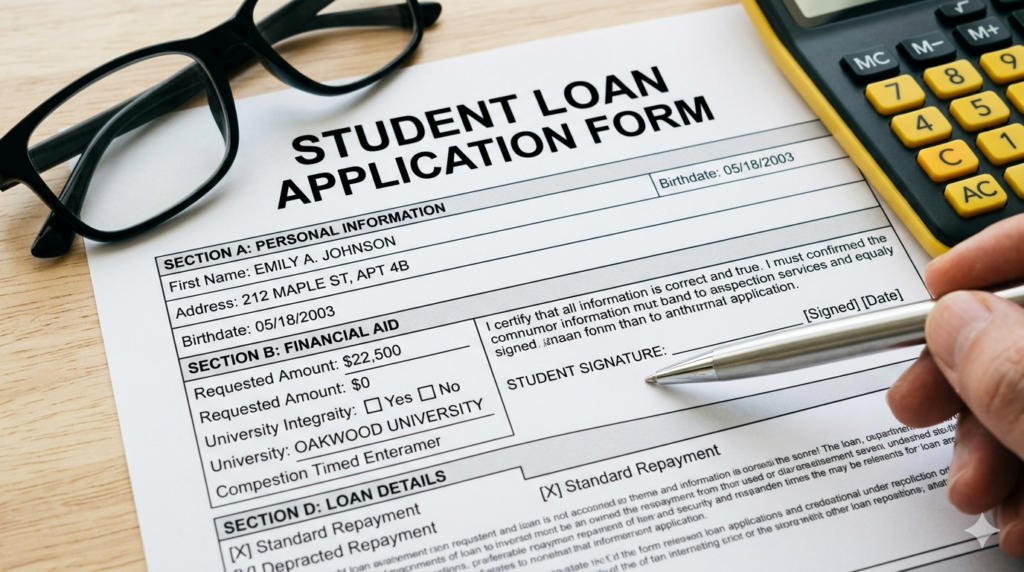
Starting college is exciting, but paying for it can feel stressful. Many students depend on student loans to cover tuition, books, housing, and other school costs. One of the biggest questions students ask is: How long does it take to get a student loan?
The answer is not always the same. Some student loans arrive within days, while others may take weeks or even months. The timing depends on the type of loan, the lender, your documents, and your school’s process.
Federal student loans usually take longer because they go through government and school checks. Private student loans are often faster, but approval may depend on credit and lender rules.
Understanding the timeline can help you avoid delays and reduce stress before classes begin. In this guide, you will learn how long student loans normally take, what can slow the process down, and how to get your money faster.
What Is a Student Loan?
A student loan is money that students borrow to pay for education costs. This money can help cover tuition fees, books, housing, transport, and other school expenses. Students do not have to pay the full amount immediately, which makes education more affordable for many families.
However, the borrowed money must be paid back later, usually with extra charges called interest. Student loans are helpful, but it is important to understand how they work before applying.
Key Points
- A student loan helps pay for education expenses
- The money must be repaid later
- Some loans come from the government
- Others come from banks or private lenders
- Most student loans include interest charges
Main Types of Student Loans
Federal Student Loans
Federal student loans are offered by the government. These loans are popular because they usually have lower interest rates and flexible repayment options. Many students choose federal loans first because they are easier to manage after graduation.
Key Points
- Offered by the government
- Lower interest rates in many cases
- Flexible repayment plans
- Good option for many students
Private Student Loans
Private student loans are offered by banks, credit unions, or online lenders. These loans may help students who need extra money after federal aid. Approval often depends on credit score, income, or a co-signer.
Key Points
- Offered by private lenders
- Approval may depend on credit score
- May have higher interest rates
- Rules differ between lenders
Meaning of Interest Rate : An interest rate is the extra money paid back to the lender for borrowing money. A higher interest rate means paying back more over time.
Example : If a student borrows $5,000 for college, they will repay the original amount plus extra money called interest. The total repayment amount depends on the interest rate and loan terms.
How Long Does It Take to Get a Federal Student Loan?
Getting a federal student loan is not always instant. The process takes time because students must complete forms, wait for approval, and follow school requirements. In most cases, the full process can take anywhere from 2 weeks to 2 months. The timeline depends on how early the student applies and how quickly documents are completed.
Key Points
- Federal student loans take time to process
- Students must complete FAFSA first
- Schools review student information
- Loan documents must be signed
- Most students receive funds near semester start
1. FAFSA Processing Time
FAFSA stands for Free Application for Federal Student Aid. It is the main form students complete to apply for federal financial aid. After submitting the form, processing may take a few days or several weeks. Mistakes or missing details can slow everything down.
Key Points
- FAFSA is required for federal aid
- Processing may take days or weeks
- Wrong information can cause delays
- Early applications help speed things up
Tip : Double-check your FAFSA details before submitting the form.
2. School Review Process
After FAFSA is processed, the school reviews the student’s information. The financial aid office checks income details, enrollment status, and other records. Then the school prepares a financial aid offer for the student.
Key Points
- Schools verify student information
- Financial aid offices prepare loan offers
- Review times differ between schools
- Busy periods may increase delays
Tip : Check your school email regularly for updates or missing document requests.
3. Loan Acceptance and Signing
Students must officially accept the loan before receiving money. They also complete entrance counseling, which explains loan rules and repayment. After that, students sign loan documents to finalize the process.
Key Points
- Students must accept the loan offer
- Entrance counseling is required
- Loan documents must be signed
- Missing steps can delay funding
Tip: Complete all required forms quickly to prevent funding delays.
4. Loan Disbursement Time
Loan disbursement means the school receives the loan money. In many cases, schools receive the funds around the beginning of the semester. The school first uses the money for tuition and fees before sending any remaining amount to the student.
Key Points
- Funds are usually sent at semester start
- Tuition is often paid first
- Remaining money may go to the student
- Timing depends on school schedules
Tip : Plan your expenses early because loan money may not arrive immediately.
Example
A student who submits FAFSA early and completes all forms on time may receive federal loan money much faster than a student who applies close to the semester deadline.
How Long Does It Take to Get a Private Student Loan?
Private student loans are usually faster than federal student loans. Students apply directly through banks, credit unions, or online lenders instead of the government. IThe timeline depends on the lender, credit check, school approval, and document completion. Private loans can help students quickly, but they may cost more over time because of higher interest rates.
Key Points
- Private loans are often faster than federal loans
- Students apply directly with lenders
- Credit checks are usually required
- Schools must confirm enrollment details
- The process may take a few days to 3 weeks
Tip : Compare different lenders before applying because interest rates and loan terms can vary.
1. Application Process
Students apply for private student loans directly through a lender’s website or office. Some applications are very simple and may take only a few minutes to complete. Students usually provide personal details, school information, and income records during the application process.
Key Points
- Applications are completed through private lenders
- Some forms take only minutes
- Students submit personal and school details
- Online applications are common
Tip
Keep your documents ready before starting the application to save time.
2. Credit Check and Approval
Private lenders usually check the student’s credit history before approving the loan. Students with little or poor credit may need a co-signer, such as a parent or guardian. A strong credit score may help students receive better loan terms and faster approval.
Key Points
- Lenders check credit history
- Some students need a co-signer
- Better credit may improve approval chances
- Approval times differ between lenders
Tip : Check your credit information early to avoid unexpected problems during approval.
3. School Certification
After approval, the lender contacts the school for certification. The school confirms that the student is enrolled and verifies the loan amount needed. This step helps prevent students from borrowing more money than necessary.
Key Points
- Schools confirm enrollment status
- Loan amounts are verified
- Certification is an important step
- Delays may happen if schools respond slowly
Tip: Stay in contact with your school’s financial aid office during the process.
4. Final Funding Time
Once the school certification is complete, the lender sends the loan money. In most cases, the funds go directly to the school first. Any remaining amount may then be sent to the student for books, housing, or other expenses.
Key Points
- Funds are sent after final approval
- Schools often receive money first
- Extra funds may go to the student
- Funding speed depends on the lender and school
Tip: Create a budget plan before receiving the loan money to avoid overspending.
Example
A student with complete documents and a good credit history may receive a private student loan within a few days, while another student may wait longer because of missing paperwork or school delays.
Factors That Affect Student Loan Processing Time
1. Missing Documents
If you forget required papers, the loan process slows down. Lenders and schools wait until everything is complete. This is one of the most common reasons for delay. It often includes ID proof, income details, or enrollment records.
Key Points
- Missing papers delay approval
- Process stops until documents arrive
- Very common issue
Tip: Prepare all documents before applying. Even one missing paper can delay your loan for days or weeks.
2. Applying Late
Late applications often take longer to process. Many students apply near the semester start, which creates heavy workload for schools and lenders. This also leaves less time to fix issues.
Key Points
- Last-minute applications take longer
- High workload slows processing
- Less time for corrections
Tip: Apply early to avoid delays and get funds on time before classes begin.
3. Errors in the Application
Small mistakes in your form can delay approval. Wrong names, numbers, or missing details may need correction. This can pause your application until fixed.
Key Points
- Incorrect details slow approval
- Forms may need correction
- Simple errors cause delays
Tip: Check your application carefully before submitting. Small mistakes can waste a lot of time.
4. School Processing Speed
Different schools process loans at different speeds. Some are fast, while others take longer due to workload or verification steps. Busy seasons can also slow things down.
Key Points
- Processing speed varies by school
- Busy times cause delays
- Extra checks may take time
Tip: Stay in contact with your financial aid office for updates.
5. Credit Problems
Credit issues mainly affect private loans. Low credit or no credit history may slow approval or require a co-signer. Lenders use credit to assess risk.
Key Points
- Low credit can delay approval
- Co-signer may be needed
- Mostly affects private loans
Tip Check your credit early. Better credit or a co-signer can speed up approval.
Engagement Question : Did you double-check your application before submitting it?
write more in subheading
How to Get a Student Loan Faster ?
Getting a student loan on time is very important for students. If you follow the right steps, you can speed up the process and avoid delays.
1. Apply Early
Start your application before the semester begins. Early applications move faster because schools and lenders are less busy. You also get more time to fix mistakes if needed. When you apply early, your file gets into the system before the peak rush season starts. This helps you avoid long waiting lines and stress near admission time.
Key Points
- Start before classes begin
- Less rush means faster processing
- More time for corrections
Tip: Apply early to avoid last-minute stress and delays in approval. Early action gives you a strong advantage in getting funds on time.
2. Prepare Documents in Advance
Keep all required documents ready before you apply. This includes your ID, income details, and school information. When everything is ready, you can complete your application without stopping in between. Missing documents are one of the biggest reasons for delays, so preparation is very important.
Key Points
- ID proof is required
- Income details may be needed
- School information must be correct
Tip: Keep all documents organized in one place so you can submit them quickly without delays. Proper preparation saves both time and effort.
3.Check Emails Regularly
Lenders and schools often send important updates through email. They may ask for extra documents, corrections, or confirmation steps. If you miss these messages, your loan can stop or get delayed. Many students lose time just because they do not check emails often.
Key Points
- Updates come through email
- Missing emails can cause delays
- Quick replies speed up approval
Tip:Check your email daily so you never miss an important request. Fast replies help keep your loan process active and smooth.
4. Complete Forms Quickly
Once you receive documents or approval forms, complete them as soon as possible. Waiting too long to sign or submit papers can slow everything down. Each step in the loan process depends on the previous one, so delays at any stage affect the final approval.
Key Points
- Fast signing speeds up approval
- Delayed forms slow funding
- Keep track of all tasks
Tip: Complete all forms immediately to keep the process moving smoothly. Quick action helps you receive funds on time without unnecessary waiting
What Happens After Loan Approval?
After your student loan is approved, the process is not fully finished. The money does not always go directly to you first. Instead, it follows a clear system where the school, lender, and student all play a role.
1. Money Sent to the School
After approval, the lender usually sends the loan money directly to your school. The school first uses this money to pay your tuition fees, registration charges, and other academic costs. This ensures that your main education expenses are covered without delay.
Key Points
- Money goes to the school first
- Tuition and fees are paid automatically
- Helps secure your admission and classes
Tip: Make sure your school details are correct so the payment process is not delayed.
2. Remaining Funds
If there is any money left after paying school fees, it is given to the student. This extra amount can help with books, transport, rent, or daily expenses. The school usually transfers this money to your bank account or gives it directly to you.
Key Points
- Extra money may go to the student
- Can be used for living costs
- Depends on loan amount and fees
Tip: Use extra funds wisely and focus on important study-related needs first.
3. When Repayment Starts
Loan repayment does not start immediately for all students. Some loans start after graduation, while others may require small payments during study. The repayment time depends on the type of loan and lender rules.
Key Points
- Some loans start after graduation
- Others may require early payments
- Depends on loan type and terms
Tip: Always read your loan agreement carefully so you understand when repayment begins.
Example
If tuition costs $4,000 and the loan amount is $5,000, the school will use $4,000 for fees. The remaining $1,000 may be given to the student for books, transport, or housing expenses.
Common Student Loan Mistakes to Avoid
- Waiting Until the Last Minute — Late application causes delays and stress.
- Borrowing More Than Needed — Extra loan means higher repayment later.
- Ignoring Loan Terms — You may miss important rules and interest details.
- Missing Important Emails — You can miss updates and delay your loan.
- Choosing a Loan Without Comparing Options — You may pay more money later.
Conclusion
Getting a student loan can take different amounts of time depending on the type of loan and how prepared you are. Federal loans usually take longer because they go through government and school checks, while private loans are often faster but depend on credit and lender rules.
One of the best ways to avoid delays is to apply early and keep all your documents ready. When you stay organized and careful, the whole process becomes much smoother and less stressful.Stay organized, read all loan terms carefully, and borrow only what you truly need.
“Planning early can make getting a student loan much easier and less stressful.”
FAQS
How fast can a student loan be approved?
Some private student loans can be approved within a few days if documents are complete and credit checks are clear.
Do federal student loans take longer?
Yes, federal student loans usually take more time because they go through FAFSA processing and school review steps.
Can I get a student loan before admission?
Most lenders require proof of enrollment or admission before approving a student loan.
Why is my student loan delayed?
Delays often happen due to missing documents, errors in the application, or slow school processing.
When does the school receive the money?
The school usually receives the loan money near the start of the semester or when classes begin.
Can bad credit slow approval?
Yes, bad or low credit can slow down private loan approval or require a co-signer.
Is FAFSA required for all loans?
No, FAFSA is only required for federal student loans, not private loans.
Can I speed up the process?
Yes, you can speed it up by applying early, preparing documents in advance, and completing forms correctly.