
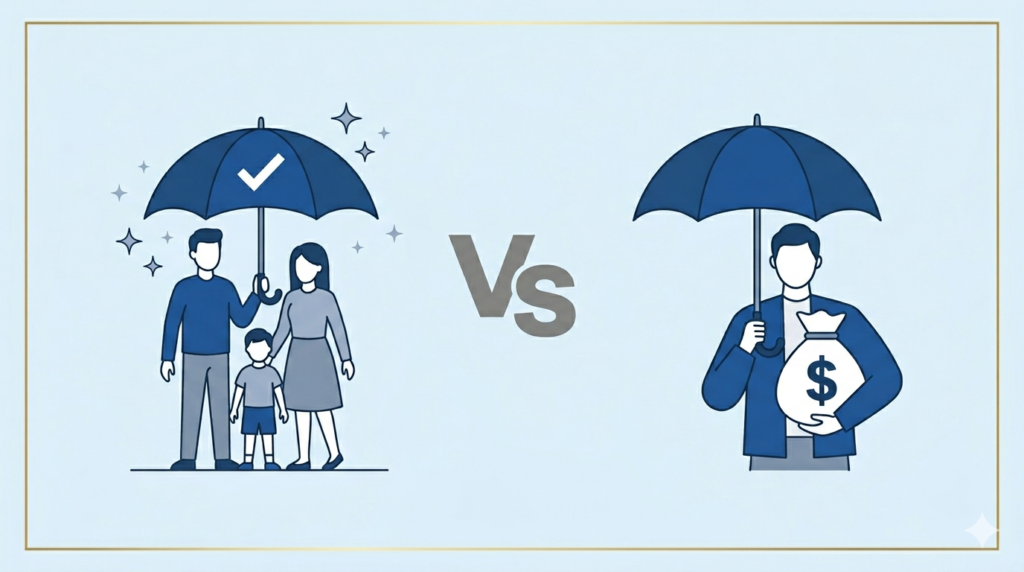
Life insurance is a simple plan that helps protect your family’s future money needs. It gives financial support to your loved ones if something happens to you. It works like a safety shield for your family.People buy life insurance because life is uncertain. It helps cover important costs like food, rent, school fees, and loans. It gives peace of mind that your family will not struggle with money during hard times.
There are two main types of life insurance. One is term life insurance, which covers you for a fixed number of years. The other is whole life insurance, which lasts your entire life. Both options give protection, but they work in different ways and fit different needs.
Do you want your family to stay financially safe even if you are not there to support them?
What is Life Insurance?
Life insurance is a simple plan that protects your family’s money future. You pay a small amount regularly to an insurance company. In return, the company promises to give money to your family if something happens to you. This money helps your family stay safe and stable when you are not there to support them. It works like a financial safety shield for your loved ones.
Key Points
- Family gets money after death
- Helps cover daily expenses
- Reduces financial stress
- Gives peace of mind
Term Life Insurance Explained
Term life insurance is a simple and low-cost type of life insurance. It gives protection for a fixed period of time. This time can be 10, 20, or 30 years. During this period, your family is financially protected if something happens to you. After the term ends, the coverage also ends.
It is mainly used for temporary financial needs like raising children, paying loans, or supporting family expenses during working years.
Key Points
- Low cost protection
- Fixed duration cover
- No savings or investment value
- Easy and simple plan
What It Is
- Life insurance that lasts for a fixed time
- Example: 10, 20, or 30 years coverage
- Protection ends after the selected time
How It Works
- You pay a small monthly premium
- Coverage stays active during the chosen term
- Family receives money if death happens in the term
- No payout if term ends while you are alive
Example: A person buys a 20-year term plan to protect their family.If the person dies within 20 years, the family gets financial support.If the person survives after 20 years, the policy ends without payout.
Whole Life Insurance Explained
Whole life insurance is a type of life insurance that protects you for your entire life. It does not expire after a few years. It stays active as long as you keep paying your premiums. It also builds savings over time, which adds extra value to the policy.This plan is often used for long-term financial security and future planning for family or wealth transfer.
Key Points
- Higher cost than term life insurance
- Lifetime protection
- Includes savings (cash value)
- Good for long-term financial planning
What It Is
- Life insurance that lasts for your whole life
- No expiry date
- Coverage stays active as long as payments continue
How It Works
- You pay regular premiums (monthly or yearly)
- Coverage stays active for life
- Family receives money after your death
- Policy builds cash value (savings) over time
Example: A person buys whole life insurance at age 25.Even at age 80 or 90, the policy is still active.When the person passes away, the family receives the payout.
Main Differences Between Term life and Whole life Insurance
Here is a simple comparison of term life and whole life insurance. It helps you understand both plans quickly and clearly.
| Feature | Term Life Insurance | Whole Life Insurance |
|---|---|---|
| Time | Short (10–30 years) | Lifetime coverage |
| Cost | Low cost | High cost |
| Savings | No savings value | Builds savings value |
| Purpose | Temporary safety | Lifelong safety |
Which One Should You Choose?
Choosing between term life and whole life insurance depends on your needs, money, and long-term goals.If you want simple and low-cost protection, term life insurance can be a good choice. It gives strong coverage for a fixed time and helps protect your family during important years like loans, education, or child care.
If you want long-term safety and lifetime protection, whole life insurance can be better. It also builds savings over time, which adds extra financial value in the future.
Key points:
- Low budget → Choose term life insurance
- Long-term safety → Choose whole life insurance
- Short-term needs → Choose term life insurance
- Lifetime planning → Choose whole life insurance
Quick Question:
What matters more to you—saving money today or getting lifetime protection for your family?
Real-Life Scenarios
Example1: A young worker who has a family loan often chooses term life insurance. It gives low-cost protection during working years. It helps cover loans and protects the family from financial stress if something happens.
Example2: A business owner who is planning inheritance usually prefers whole life insurance. It gives lifetime protection and also builds savings over time. It helps pass financial support to family members in the future.
Example3: A student who is planning their future mainly focuses on understanding life insurance. At this stage, simple awareness is enough. Later, when they start earning, they can choose a plan based on their income and needs.
Common Mistakes to Avoid
- Thinking whole life insurance is always better
- Not checking your budget before buying a plan
- Ignoring your long-term financial needs
- Buying insurance without understanding how it works
- Choosing a plan without comparing options
- Delaying insurance too long and starting late
Conclusion
Term life insurance and whole life insurance both help protect your family, but they work in different ways. Term life gives coverage for a fixed time at a low cost. Whole life gives lifetime coverage and also builds savings, but it costs more.The main difference is simple. Term life is for short-term protection. Whole life is for lifelong protection and long-term planning.
The best choice depends on your needs and your budget. Always choose a plan that you can afford and that matches your family’s future goals.
FAQS
What is cheaper: term or whole life?
Term life insurance is cheaper. It gives protection for a fixed time, so the cost stays low.
Can I switch from term to whole life?
Yes, many insurance plans allow switching. You may need to pay more money when you change.
Do I get money back in term life?
No, term life does not give money back. It only gives money if something happens during the term.
Is life insurance needed for young people?
Yes, it can be helpful. Young people get low prices and long-term protection for their family.
What happens after term life ends?
The coverage stops. If you still need protection, you must renew or buy a new plan.
Is whole life insurance a good investment?
It can help build savings over time, but it is mainly for protection, not quick profit.
How much coverage should I buy?
It depends on your needs. A common idea is to cover loans, daily expenses, and family needs for some years.
Can I cancel life insurance anytime?
Yes, you can cancel most plans, but you may not get all your money back.