Do you get worried about paying bills when your income changes?
Budgeting can feel hard if you don’t earn the same amount every month. Some months you may earn a lot, and other months just a little. This can make it hard to know how much to spend or save.Even if your income changes, you can take control of your money. You can plan for bills, save a little, and still have some extra for fun things. It just takes a simple system that works for you.
In this article, you will learn easy steps to track your income, plan your spending, and handle extra money. You will also get tips to stay safe in low-income months. By the end, you will feel confident managing your money no matter how much you earn each month.
Understand Your Income
Knowing your income is the first step to a strong budget. When your income changes every month, understanding your money helps you plan better and avoid stress.
Track Your Earnings
Look at how much money you earned over the past 6–12 months. Write down each month’s income. Add all the amounts together, then divide by the number of months to find your average income. This average shows you roughly what you earn each month and helps you plan your spending more confidently.
Key Points:
- Check income for at least 6 months.
- Add all monthly incomes and divide by the number of months to get the average.
- Use the average to plan regular expenses.
Know Your Lowest Income Month
Next, find the month when you earned the least. Your budget should be safe even in a low-income month. Plan your essential expenses—like rent, food, utilities, and transport—based on this lowest amount. This is called your “base budget,” and it ensures you can cover needs no matter how your income changes.
Key Points:
- Identify your lowest-income month.
- Base your essential spending on this amount.
- Keep this budget as your safety plan.
List Your Expenses
Knowing what you spend money on is the next step in creating a budget. Separating essentials from non-essentials helps you make smart choices when your income changes.
Essentials vs Non-Essentials
Essentials are the things you must pay for every month. These include rent, food, utilities, and transportation. Non-essentials are things you can skip or reduce if needed. Examples include eating out, entertainment, and shopping for extra items. Separating your expenses helps you see where to cut back in low-income months.
Key Points:
- Essentials = must-pay bills and daily needs.
- Non-essentials = wants or extra spending.
- Knowing the difference helps prevent money stress.
Prioritize Spending
Always pay for essentials first. This ensures you cover your basic needs before spending on fun or extra items. Ranking your expenses by importance helps you decide what to spend money on each month. In months when income is low, you can cut non-essentials without worry.
Key Points:
- Essentials come before non-essentials.
- Rank expenses from most important to least.
- Adjust spending based on how much money you have each month.
Create a Flexible Budget
A flexible budget helps you manage your money no matter how much you earn each month. It adjusts to low-income and high-income months so you stay in control.
Base Budget for Low-Income Months
In months when you earn less, focus only on essentials first. Pay for rent, food, utilities, and transportation before anything else. This ensures your basic needs are covered even if money is tight.
Key Points:
- Plan essentials first in low-income months.
- Avoid spending on non-essentials when income is low.
- Treat this as your “minimum safe budget.”
Extra Income Plan
In months when you earn more than usual, plan how to use the extra money wisely. You can save it, pay off debt, or add to your emergency fund. Avoid spending all the extra on wants, so you stay prepared for future low-income months.
Key Points:
- Use extra income for savings, debt, or emergencies.
- Avoid overspending on wants.
- High-income months are opportunities to strengthen your financial safety.
Percentage Budget Method
You can also use a simple percentage system to split your income. For example: 50% for essentials, 30% for wants, and 20% for savings. This helps you balance spending and saving no matter how much you earn.
Key Points:
- 50% essentials, 30% wants, 20% savings is a simple guide.
- Adjust percentages based on your needs.
- Keeps spending balanced in high or low-income months.
Build an Emergency Fund
An emergency fund is money you save for unexpected situations. It is essential for people with variable income because it protects you in months when money is low.
Why It’s Important
An emergency fund gives peace of mind. It covers bills if your income drops or unexpected expenses happen. You won’t have to borrow money or skip essentials.
Key Points:
- Protects against low-income months.
- Prevents stress and money problems.
- Acts as a financial safety net.
How Much to Save
Aim to save 3–6 months of essential expenses. If this feels hard, start small and save a little each month. Over time, your emergency fund will grow and keep you secure.
Key Points:
- Target 3–6 months of essentials.
- Save a small amount regularly.
- Use it only for real emergencies.
Track and Adjust Monthly
Even a good budget needs regular checking. Tracking and reviewing your spending helps you stay on top of your money.
Record Spending
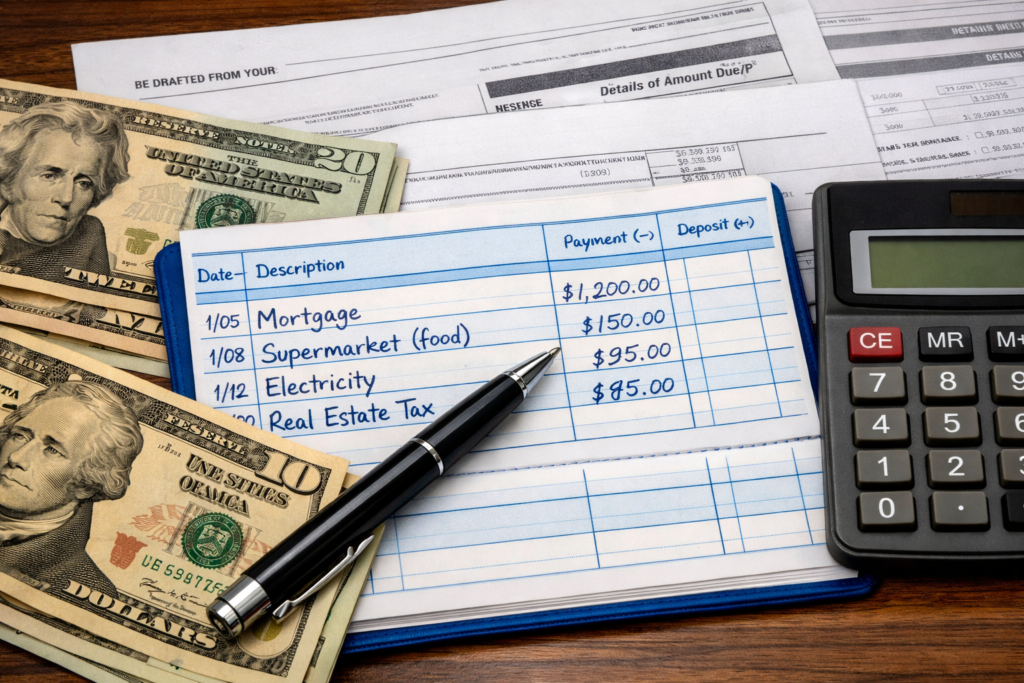
Keep track of every expense. You can use a notebook, a spreadsheet, or a budgeting app. Writing down your spending shows where your money goes and helps you spot areas to save.
Key Points:
- Record all income and spending.
- Use apps or spreadsheets for easy tracking.
- Helps prevent overspending.
Review and Adapt
At the end of each month, compare your actual income and spending to your budget. Make small changes for the next month based on your results. This keeps your budget realistic and flexible.
Key Points:
- Compare actual income vs planned budget.
- Adjust spending for the next month.
- Stay flexible—your budget is a guide, not a rule.
Tips for Success
- Pay yourself first: Save money before spending on wants.
- Cut non-essential expenses when income is low.
- Automate bills and savings to reduce stress.
- Ask yourself: “Can I afford this this month?” before buying anything. This simple question helps prevent overspending and keeps your budget safe.
Conclusion
Budgeting is possible even if your income changes every month. The key is to understand your money, focus on essentials, and plan for both low and high-income months. Tracking your income and expenses gives you control and helps you make smarter choices.
Start with small steps: write down your income, list your essential expenses, and see how much you can safely spend or save. Each small step builds confidence and makes your money management easier. Over time, you will feel less stress about bills and more freedom to enjoy your money.
Remember, budgeting is not about restricting yourself—it’s about making your money work for you. By staying organized and flexible, you can handle any month, save for the future, and feel secure knowing you are prepared for anything.
FAQS
1. How do I budget if my income is very unpredictable?
Focus on your lowest-income month. Plan essentials first, and treat extra money in high-income months as a bonus for savings or fun.
2. What if I can’t save every month?
Start small. Even saving a little each month adds up. The key is to build the habit, not the amount
3. Is it better to use percentages or fixed amounts?
Both work. Percentages adjust with income, while fixed amounts give a clear target. Choose what feels easier for you.
4. How much should I keep in my emergency fund?
Aim for 3–6 months of essential expenses. If that feels too much, start with a small goal and grow it over time.
5. Can I spend extra money in high-income months?
Yes, but be careful. Pay off debt, save, or add to your emergency fund first. Then you can spend a little on fun.
6. How do I know which expenses are essential?
Essentials are things you must pay every month, like rent, food, bills, and transportation. Everything else is non-essential.
7. What tools can I use to track my spending?
Use a notebook, spreadsheet, or budgeting app. Track every expense to see where your money goes.
8. How often should I review my budget?
Check your budget at least once a month. Compare planned spending to actual spending and adjust for next month.