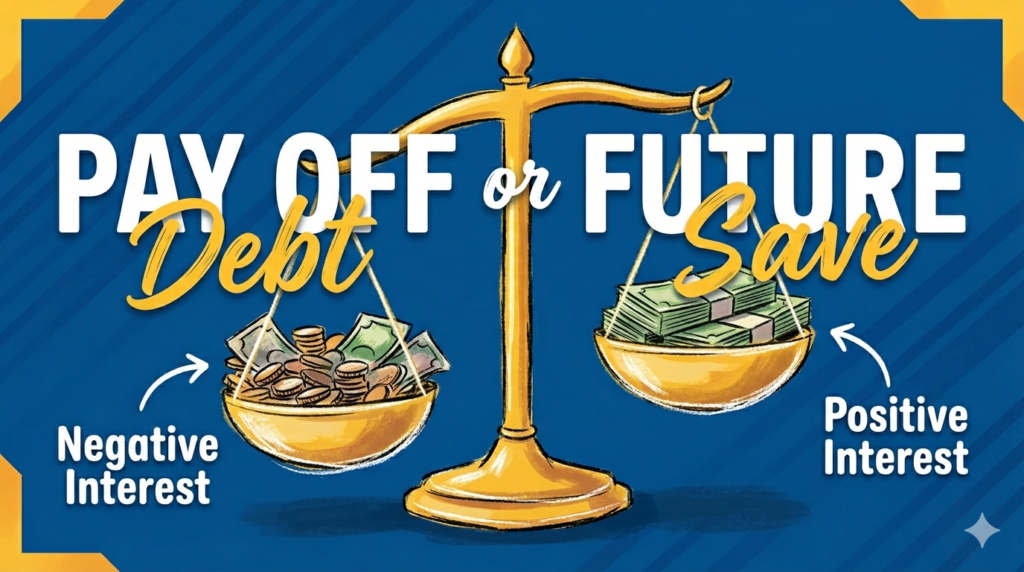
Do you pay debt first or save money first?
This is one of the most common money questions people face. It feels confusing because both sides are important. Debt needs attention. Savings also give safety. So people often feel stuck in the middle.Many people face stress when they have bills to pay but no backup money for emergencies. They try to do everything at once, but money feels too tight. This creates pressure and wrong decisions.
This article will make things simple for you. It will break the problem into easy steps. You will clearly see when to pay debt first, when to save first, and how to balance both in a smart way.By the end, you will feel more clear and confident about your next money step.
Understanding Debt and Saving
Before deciding what to do first, it is important to clearly understand two basic financial concepts: debt and saving. These two ideas shape every money decision you make.
What is Debt?
Debt is money you borrow from a bank, lender, or financial service with an agreement to repay it later. In most cases, you also pay extra money on top of the borrowed amount. This extra cost is called interest.Debt is borrowed money that must be repaid, usually with added cost.
Common examples of debt:
- Credit card balances
- Personal loans
- Installment payments (buy now, pay later plans)
- Student loans
What is Saving?
Saving is money you set aside instead of spending it. This money is kept for future needs, planned goals, or unexpected situations. It provides financial stability and security.Saving is money you keep for future use.
Common examples of saving:
- Emergency fund for unexpected expenses
- Savings for future goals (education, travel, home)
- Regular deposits in a bank savings account
Why This Decision Is Important
This decision is important because it affects your financial stability. Debt can grow if it is not paid on time due to interest and extra charges. At the same time, having no savings can create problems during emergencies because you may need money quickly. This often leads to taking more debt, which increases financial pressure.
Key Points
- Debt grows if not paid on time
- No savings creates emergency stress
- Lack of savings can increase debt
- Both affect financial health
When You Should Pay Off Debt First
You should pay off debt first when the debt is high-interest and grows quickly over time. Credit cards and fast loans are the most common examples. These debts become more expensive if you delay payments, because interest keeps adding extra cost every month. This means you lose more money the longer you wait.
Key Points
- Focus on high-interest debt first
- Credit cards and fast loans grow quickly
- Delay increases total repayment amount
- Faster repayment saves more money
Tip:
Pay more on the debt that grows faster.
Example:
A credit card bill increases faster than a small personal loan, so it should be paid first.
When You Should Save Money First
You should start saving money first when you do not have any emergency savings. A small safety fund helps you manage unexpected expenses without taking new debt. This creates financial stability and reduces stress during emergencies.
Key Points
- Start saving if you have no emergency fund
- Savings help during sudden expenses
- Prevents taking new debt
- Builds financial safety
Tip:
Save a small amount regularly, even if it is very small.
Example:
Saving for hospital bills or urgent repairs helps you avoid borrowing money in emergencies.
Best Balanced Approach
The best approach for most people is to handle saving and debt together. You pay the minimum amount on your debt to avoid penalties and keep your account active. At the same time, you build a small emergency fund to stay safe during unexpected expenses. Any extra money you have can go toward reducing debt faster. This method helps you stay stable while slowly improving your financial situation.
Key Points
- Pay minimum debt amount on time
- Build a small emergency fund
- Use extra money to reduce debt faster
- Balance saving and debt repayment
Tip:
Start small and stay consistent every month.
Engagement Question:
What feels harder for you—saving money or paying off debt?
Common Mistakes People Make
- Ignoring debt completely instead of paying it step by step
- Not saving any money for emergencies or future needs
- Spending extra money without any proper plan
- Paying only interest and not reducing the main debt
- Using credit cards for daily needs without control
- Not tracking income and expenses properly
Conclusion
In simple terms, your decision depends on your situation. If you have high-interest debt, focus on paying it first. If you have no savings, start building a small emergency fund first. For most people, the best option is to do both slowly and consistently.The goal is not perfection. The goal is progress. Small actions taken every month can improve your financial future over time.
Final Question:
What will you start first—saving or debt repayment?
FAQS
Should I stop saving to clear debt faster?
No. You should not stop saving completely. Even a small saving helps you in emergencies. Try to do both together.
How much emergency money should I save first?
Start with a small amount, like 1 to 2 months of basic expenses. You can increase it slowly over time.
Can I do both at the same time?
Yes. You can pay debt and save at the same time. Pay minimum debt and save a small amount every month.
What if my income is very low?
Start very small. Even a small amount helps. Focus on consistency, not size.
Which debt should I pay first?
Pay high-interest debt first, like credit cards or fast loans. They grow quickly.
Is it okay to take new debt to pay old debt?
Not always. It can increase your total debt if not planned well. Be careful.
What happens if I ignore my debt?
Debt can grow over time due to interest. It becomes harder to pay later.
What is the safest way to manage money?
Balance both. Pay debt regularly and also build savings step by step.