
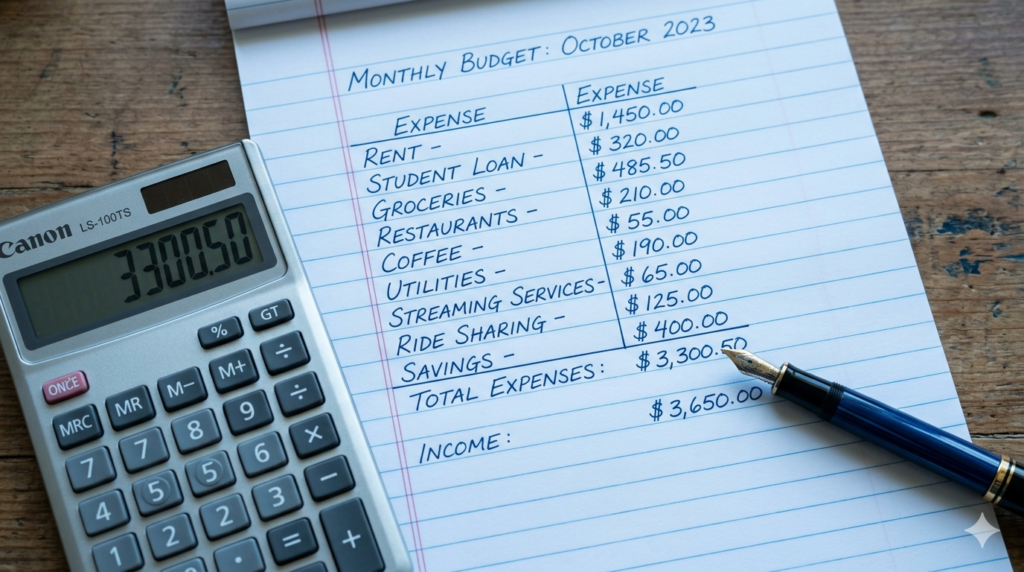
Do you ever wonder where all your money goes each month?Many people work hard, earn money, and still struggle to save. Bills, shopping, food, and small daily expenses can quickly empty your wallet before the month even ends.
That is why creating a monthly budget is so important. A budget helps you control your spending, reduce money stress, and save for important goals in the future. It gives you a clear plan for where your money should go instead of guessing every month.
The good news is that budgeting does not have to be difficult. You do not need to be a money expert or use complicated tools to start. With a few simple steps, anyone can create a beginner-friendly budget that actually works.
In this article, you will learn how to create a simple monthly budget step by step, easy budgeting methods beginners can follow, and smart tips to avoid common budgeting mistakes.
What Is a Monthly Budget?
A monthly budget is a simple plan for how you will spend and save your money each month. It helps you understand where your money goes and how much you can safely spend before the month ends.
A budget gives your money a clear purpose. Instead of wondering where your money disappeared, you can track your spending and make smarter financial decisions.
A monthly budget is a plan that helps you:
- Track your income
- Control your spending
- Save money for future goals
Step 1: Calculate Your Monthly Income
Before making a budget, you must know your total monthly income. This is the money you earn every month from all sources. Many beginners only count salary, but you should also add freelance work, side income, or allowance. Always use the real money you get after tax or deductions. This helps you make a correct budget and avoid overspending.
Example:
If you earn $1,500 salary and $300 freelance income, your total income is $1,800.
Important Points
- Add all income sources
- Use after-tax income
- Check bank statement for accuracy
- Include side income too
Income Table
| Source | Amount |
|---|---|
| Salary | $1,500 |
| Freelance | $300 |
| Total | $1,800 |
Step 2: List All Monthly Expenses
Now write all your monthly expenses. Expenses are the money you spend every month. Divide them into fixed and variable expenses. Fixed expenses stay the same like rent or bills. Variable expenses change like food or shopping. Do not forget small daily expenses because they also add up over time.
Example:
Coffee daily $5 = $150 per month.
Important Points
- List fixed expenses first
- Add variable expenses
- Include small daily costs
- Track at least one month
Expense Table
| Expense | Amount |
|---|---|
| Rent | $700 |
| Food | $250 |
| Transport | $100 |
| Internet | $50 |
| Entertainment | $80 |
Step 3: Separate Needs and Wants
Now divide your expenses into needs and wants. Needs are things you must pay for like food, rent, and bills. Wants are extra things like shopping or entertainment. This step helps you control spending and save more money. Always focus on needs first, then spend on wants.
Example:
Need = Grocery shopping
Want = Daily coffee or fast food
Important Points
- Needs are necessary
- Wants are optional
- Pay needs first
- Control wants spending
Step 4: Set Financial Goals
Set money goals before making your budget. Goals give direction to your money. You can set short-term goals like saving for a phone or emergency fund. You can also set long-term goals like buying a car or starting a business. Goals help you stay focused and save regularly.
Example:
Save $500 for emergency fund in 5 months.
Important Points
- Set short and long goals
- Write goals clearly
- Start small
- Stay consistent
Step 5: Choose a Budgeting Method
This step helps you decide how you will manage your money every month. There are different budgeting methods, but beginners should choose the simplest one. The most popular method is the 50/30/20 rule, where 50% of income goes to needs, 30% to wants, and 20% to savings. For example, if your income is $2,000, then $1,000 goes to needs, $600 to wants, and $400 to savings.
Another method is the envelope system, where you divide cash into envelopes for different expenses like food, transport, and shopping. A third method is zero-based budgeting, where every dollar has a job and nothing is left unplanned. For example, you assign all $2,000 to different categories until the balance becomes zero.
Important Points
- Use simple method
- 50/30/20 is best for beginners
- Envelope method controls cash spending
- Zero-based gives full control
Step 6: Track Your Spending
Tracking your spending means writing down every money you use each day. This step is very important because it shows your real money habits. Many beginners think they spend less, but tracking often shows the truth. You can track spending using a notebook, a spreadsheet, or a budgeting app. Checking your spending every week helps you stay on control and stop overspending early,
For example, a person tracked food delivery and realized they were spending too much. After tracking, they saved $80 every month.
Important Points
- Track every expense daily
- Review spending weekly
- Use simple tools like notebook or app
- Find where money is going
Example
| Method | Use |
|---|---|
| Notebook | Write daily expenses |
| Spreadsheet | Organize money in table |
| App | Auto track spending |
Step 7: Cut Unnecessary Expenses
Cutting unnecessary expenses means stopping money spent on things you do not really need. This step helps you save more money quickly. Many people waste money on unused subscriptions, impulse shopping, and frequent dining out. You can save money by cooking at home, comparing prices before buying, and shopping with a list. Focus on small daily savings because they slowly become big savings over time.
Example
- Unused Netflix subscription = wasted money
- Eating outside daily = high monthly cost
Important Points
- Remove unused subscriptions
- Avoid impulse buying
- Cook at home more often
- Always use a shopping list
Step 8: Build an Emergency Fund
An emergency fund is money you save for unexpected problems. This money helps you during emergencies like medical bills, car repairs, or job loss. Beginners should start small because even small savings are helpful. A good starting goal is $500. You can slowly increase it over time. An emergency fund gives you safety and reduces financial stress. Even small monthly savings become a strong backup in the future.
Example
If you save $50 every month, you can build $500 in 10 months.
Important Points
- Save for emergencies only
- Start with small amount like $500
- Add money every month
- Stay consistent with saving
Common Budgeting Mistakes
- Forgetting small expenses like snacks, coffee, or small online purchases
- Setting unrealistic savings or spending goals
- Not tracking daily spending regularly
- Giving up too quickly after making mistakes
Best Tools for Budgeting
- Budgeting Apps for easy mobile tracking
- Google Sheets or Excel for organized money records
- Notebook method for simple handwritten tracking
Tips
- Choose only one budgeting tool
- Use it regularly every day or week
- Stay consistent with the same method
- Do not switch tools again and again
Simple Monthly Budget Example
A simple monthly budget helps you see where your money goes. It shows how you divide your income into needs, savings, and other expenses. This makes money control easy for beginners.
| Category | Amount |
|---|---|
| Income | $2,000 |
| Rent | $700 |
| Food | $250 |
| Savings | $400 |
Conclusion
In the end, budgeting is all about knowing your income, tracking your expenses, setting clear goals, and saving money regularly. When you follow these simple steps, you start to understand your money better and avoid wasteful spending. At first it may feel a little hard, but with practice it becomes easy and natural. Small efforts every month can slowly improve your financial life and give you better control over your money. So start your first monthly budget today, even if it is very simple.
FAQS
What is the easiest budgeting method for beginners?
The easiest method is the 50/30/20 rule. It divides your money into three parts: needs, wants, and savings. It is simple and easy to follow for beginners.
How much money should I save each month?
Try to save at least 20% of your income. If this is hard, start with a small amount like 5% or 10% and slowly increase it over time.
Can I budget with a low income?
Yes, you can budget with any income. Budgeting is even more important when income is low because it helps you control spending and avoid waste.
How often should I review my budget?
You should review your budget once every month. You can also check weekly to make sure you are not overspending.
What if I overspend one month?
Do not worry. It happens to many people. Just check where you spent extra money, adjust your next budget, and try again next month.
Are budgeting apps necessary?
No, budgeting apps are not necessary. You can also use a notebook or spreadsheet. Apps just make tracking faster and easier.
How long does budgeting take to work?
Budgeting starts working in 1 to 2 month, if you follow it properly. Over time, it helps you save more and control spending better.
Should teenagers learn budgeting too?
Yes, teenagers should learn budgeting early. It helps them understand money, build good habits, and avoid future money problems.