
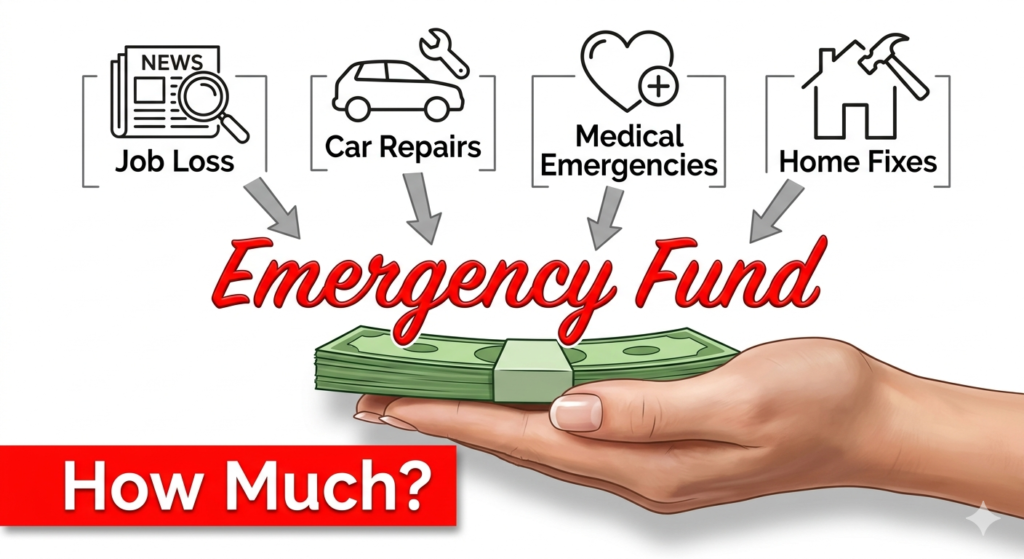
Have you ever faced an unexpected expense?
It can happen anytime. A sudden cost can come without warning.Life is not always stable. Money problems can appear when you least expect them. This is why money safety is very important.An emergency fund helps you in these sudden money problems. It is a small amount of money you save for urgent needs only. You use it when something serious happens in life.
This fund gives you support in hard times. It also helps you stay calm. You do not need to worry about borrowing money or facing debt in emergencies.
What Is an Emergency Fund?
An emergency fund is money you save only for urgent and unexpected needs. It is your financial backup for hard times. You do not use it for shopping, travel, or daily expenses. You keep it safe and use it only when a real emergency happens. It helps you avoid stress and debt during sudden problems.
Key Points
- Money saved only for emergencies
- Not for shopping or fun spending
- Helps you avoid debt
- Gives financial safety and peace of mind
- Should stay separate from normal savings
Example : If your phone breaks suddenly or you have a medical emergency, you can use your emergency fund to cover the cost.
Why Is an Emergency Fund Important?
An emergency fund is very important because it protects you from sudden money problems. Life can change quickly. Expenses can come without warning.
Financial Safety
This means your money stays safe during hard times. You can still handle urgent costs without falling into money trouble. It protects your daily life when something unexpected happens.
Key Points:
- Keeps your monthly life stable in emergencies
- Helps pay urgent bills like rent, food, or medical needs
- Protects you when income becomes zero or low
- Stops you from using risky money options
- Builds strong financial control
Avoid Debt
This means you do not need to borrow money when problems come. You can use your own savings instead of loans or credit cards. This keeps your future safe from extra financial burden.
Key Points:
- No need to take loans in emergencies
- Avoids high interest payments
- Prevents credit card debt problems
- Keeps you financially independent
- Reduces long-term money stress
Peace of Mind
This means you feel calm and relaxed about money. You know you are ready for unexpected problems. It removes fear of “what if something goes wrong.”
Key Points:
- Reduces money-related stress
- Gives feeling of safety and control
- Helps you sleep better without worry
- Builds confidence in handling life problems
- Removes fear of sudden expenses
Example
A person loses their job but still uses emergency savings to pay rent, buy food, and manage daily needs for a few months without borrowing money.
How Much Should You Save?
The amount you save in an emergency fund depends on your monthly expenses. A common rule used by finance experts is to save enough money to cover your basic needs for a few months. This helps you stay safe during income loss or emergencies.You should save 3 to 6 months of your monthly expenses. This means your emergency fund should be enough to cover your living costs for at least a few months if something goes wrong.
Key Points:
- Save 3 to 6 months of expenses
- Covers rent, food, bills, and transport
- Helps in job loss or emergencies
- Gives strong financial safety
- Builds long-term stability
Example: If your monthly cost is 50,000, then your emergency fund should be 150,000 for 3 months and 300,000 for 6 months.
How to Start an Emergency Fund ?
Starting an emergency fund is very simple. The main goal is to build a habit of saving money regularly.. The key is consistency, not the amount.
Start Small
Begin with a small fixed amount every week or every month. Even a small saving is useful because it builds your discipline. As your income grows, you can slowly increase the amount. The important thing is to start today instead of waiting for a “perfect time.”
Key Points:
- Start with a small amount
- Save weekly or monthly
- Focus on building habit
- Increase savings over time
- Do not wait for big income
Use Simple Rule
A very easy way is to save 10% of your income. This means you take a small part of what you earn and save it before spending on anything else. This method works well because it is simple and easy to follow for beginners.
Key Points:
- Save 10% of income
- Simple and beginner-friendly rule
- Works with any income level
- Helps build steady savings
- Easy to follow every month
Keep It Separate
Always keep your emergency fund in a separate bank account. This helps you avoid using it for daily expenses or unnecessary spending. When money is separate, it becomes easier to track and protect.
Key Points:
- Use a different savings account
- Do not mix with daily money
- Helps control spending
- Makes tracking easier
- Protects emergency savings
Where Should You Keep It?
You should keep your emergency fund in a safe and easy place. The goal is simple. Your money must stay secure and be ready when you need it fast. A savings account is the best option because it is safe and easy to use anytime.
Key Points
- Use a safe savings account
- Money should be easy to withdraw
- Keep it separate from daily spending money
- Choose simple and secure options
- Focus on safety, not profit
Warning
Do not put your emergency fund in risky crypto or stocks. These can lose value quickly, and you may not get your money when you need it most.
Common Mistakes People Make
- Spending emergency fund on shopping
- Not saving regularly
- Waiting for “big income” to start saving
- Using emergency fund for small wants
- No separate savings account
- Stopping savings after a few months
- Not setting a clear savings goal
Conclusion
An emergency fund is your financial safety net. It helps you stay safe during sudden money problems. It also protects you from stress and debt in hard times. You do not need a big amount to start. Even small savings can make a big difference over time.
Start today, even if it is a small amount. The key is to build the habit and stay consistent. Your future self will thank you for it.
Final Question to Reader:
What is your first saving goal going ?
FAQS
Can I start with a small amount?
Yes. Even small savings help. Start with what you can and build slowly over time
Should I invest my emergency fund?
No. Keep it safe and easy to access for real emergencies.
How fast should I build it?
Go slow. Focus on consistency.
How fast should I build it?
Go slow. Focus on regular saving and consistency, not speed.
What counts as an emergency?
Medical needs, job loss, urgent home or car repairs.
Where should I keep it?
A separate savings account that is safe and easy to use.
How much should I save first?
Start with a small goal like one month of expenses, then grow it step by step.
Can I use my emergency fund for small needs?
No. Only use it for real emergencies, not daily wants or shopping.
What if I stop saving for a few months?
Just restart again. Do not quit. Even restarting small is still progress.